
The Mental Game - When your Inner Chimp Takes Over
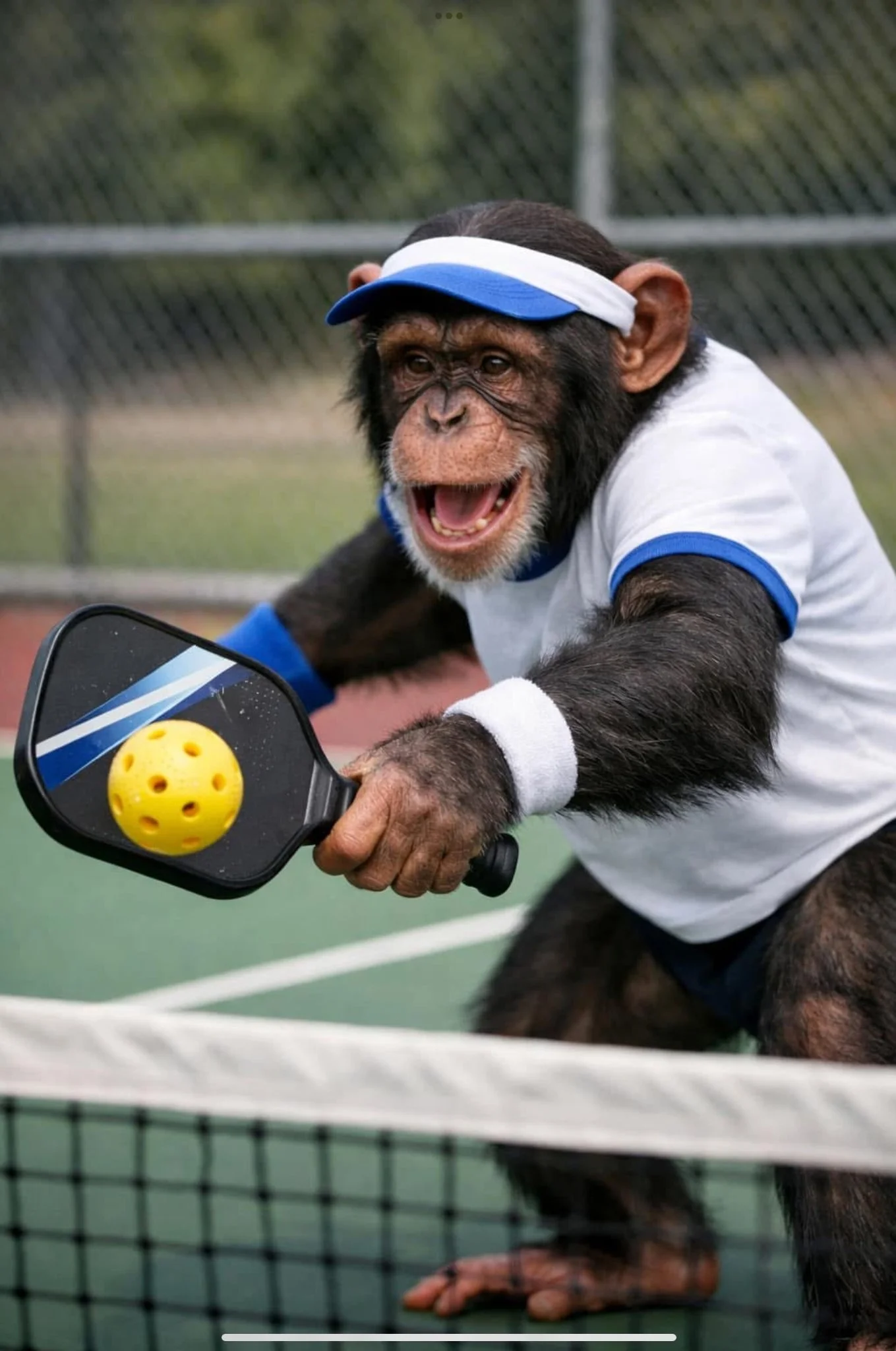
The Mental Game: When Your Inner Chimp Takes Over the Court. ((Inspired by The Chimp Paradox by Professor Steve Peters)
Pickleball should be simple. Hit the ball over the net and try not to take out any innocent bystanders. That is the job. And yet, every single player has experienced that horrifying moment where a basic serve turns into a psychological nightmare. Your hand goes rogue. Your paddle feels like you borrowed it from a caveman. You genuinely forget how to function as a human. This is not because you suddenly lost all skill. It is because your inner chimp has grabbed the controls.
In the book The Chimp Paradox by Professor Steve Peters, he explains that our brain has two key drivers. The Human is the calm, logical, highly trained version of us. The Chimp is the emotional, impulsive, dramatic version that reacts up to ten times faster than the rational brain. So when one little serve goes sideways, the Chimp jumps into action screaming we are terrible now and everyone is watching and we should probably move out of the country. It means well, but like a toddler with scissors, it is not helpful.
The physical reaction that follows is both hilarious and tragic. You grip the paddle like you are auditioning for a role in a hostage thriller. Breathing becomes optional. Your body stiffens tighter than a statue in a windstorm. The fear of missing becomes the exact reason you miss. This is the self fulfilling prophecy the Chimp specializes in creating.
Here is the thing. The Chimp is not bad. It just needs guidance. Think of it like a two month old Labrador puppy. Adorable, enthusiastic, sprinting around off leash with no sense of danger or boundaries. You do not punish the puppy for being a puppy. You train it. You teach it structure and routine. You teach it where you want it to go and how you want it to behave. That is our responsibility as athletes. We must train the Chimp.
The way to do that is surprisingly simple. Instead of obsessing over where the ball will land, which we cannot control once it leaves the paddle, we bring our attention back to the process, the parts we are in charge of. Breathe. Loosen your grip. Smooth, easy motion. Balanced recovery. The Human manages the moment before and the moment after contact. That is our entire kingdom of control. When we stay there, the Chimp relaxes because it feels supported, not threatened.
The yips are not a physical crisis. They are a mental hijacking. The good news is that we can take back the controls any time we choose. We calm the Chimp. We trust the Human. And we get out of our own way long enough to let the swing we already own do its job.
Here is a quick courtside reset to help: exhale, shake out your hand, drop your shoulders, widen your focus, choose one simple cue like smooth swing or light hands, stand tall, and then swing the easy swing. That is all it takes to bring the Human brain back online and show that overly dramatic Chimp that everything is fine and we do, in fact, remember how to serve a pickleball.
Your swing is not broken. Your trust just wandered off for a minute. So the next time your brain tries to make pickleball feel like brain surgery, remind yourself that you are trained, you are capable, and you are not here to survive this sport. You are here to enjoy it. Train the Chimp. Trust the Human. And hit the ball like you mean it